
EMLA cream,
does it really help with Reduced cannulation pain versus a lidocaine patch?
research showsThe grade is B. In a 66-person multicenter randomized crossover trial, EMLA improved the 100-mm pain score 10.1 mm more than lidocaine tape (95% CI 5.9 to 14.2; P=0.00001). All 66 participants completed both periods, and central registration, software allocation, and public funding were confirmed. However, this was a single open-label trial of a subjective pain outcome, giving B with 70 points.
ads claimEMLA truly lowered pain scores more than lidocaine tape in this trial. One open crossover study does not guarantee a large noticeable benefit for every dialysis patient.
Useful facts when choosing a product
- Each site received 1 g EMLA, containing 25 mg lidocaine plus 25 mg prilocaine, 60 minutes before puncture; one 18-mg lidocaine tape was applied 30 minutes before puncture.
- A 16-gauge needle was used, and all 66 participants completed both periods.
- Dose and application time should follow the specific product labeling and dialysis-unit protocol.
What the research actually shows
Fujimoto K, Adachi H, Yamazaki K, Nomura et al. centrally registered and software-randomized 66 maintenance-hemodialysis patients to EMLA-then-tape, 32, or tape-then-EMLA, 34. The open crossover trial used a one-week washout, and all 66 completed and were analyzed. UMIN000027885 and the article both identify 100-mm VAS cannulation pain as the primary endpoint. Carryover P=.64 and period P=.46 were null. The article reports JSPS grant 18K15988 and no additional external funding.
Why this is classified as B (70)
A publicly funded multicenter randomized crossover trial confirmed its prespecified pain endpoint with a medium-sized contrast. Lack of independent replication and open assessment of subjective pain limit the verdict to B with 70 points.
Counterpoint. No SF-36 quality-of-life subscale differed significantly. This verdict is limited to pain at repeated cannulation.
Rejudgment record. Cross-check applied — The article and UMIN registry were cross-checked for central allocation, all-66 analysis, prespecified pain primary outcome, effect and confidence interval, open design, and public funding.
| Endpoint | P | Patient-reported treatment goal - the symptom is the goal |
| Replication | R1 | Single confirmatory trial |
| Independence | I2 | Decisive evidence is publicly or non-profit funded |
| Effect size | E+ | Meets the clinically important threshold |
The scoring table and the verdict agree (B).
Sub-claim grades by effect
This ingredient is marketed for several effects. A single overall grade blends strong and weak claims together, so each effect is graded separately here. The overall grade reflects the strongest disconfirming or core claim.
| Effect (sub-claim) | Grade | Basis |
|---|---|---|
| Reduced cannulation pain versus lidocaine tape | B | The VAS improvement difference was 10.1 mm. |
| Improved quality of life | D | No SF-36 subscale differed significantly. |
Cross-check — Codex and Claude
Evidence Table
| Study | Design | Sample | Funding | Endpoint | Result | Weight |
|---|---|---|---|---|---|---|
| Study 1 | Multicenter open-label randomized crossover trial | 34 | Japan Society for the Promotion of Science Grant-in-Aid for Young Scientists 18K15988; no additional external funding | Improvement in 100-mm VAS pain at arteriovenous-fistula puncture | EMLA improved pain 10.1 mm more than tape, 95% CI 5.9 to 14.2, P=0.00001; carryover P=.64 and period P=.46 | Single publicly funded patient-centered pain trial |
Receipt — 2 References
All 2 cited sources were verified for existence at the original page (as of 2026-08-14).
Reviewed and approved: Chamgap Editorial Team · Approval date: 2026-08-14 · Corrections: none
Cite this verdict
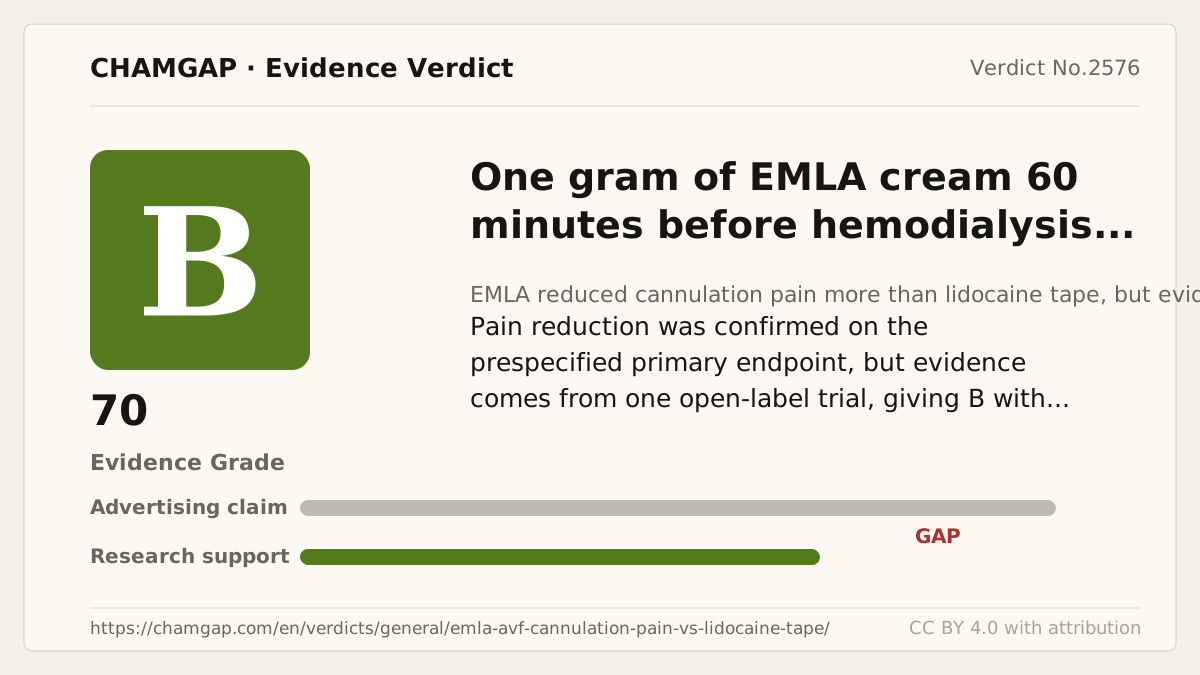
[Chamgap] EMLA cream x hemodialysis arteriovenous-fistula cannulation pain — Evidence Grade B·70. 2 cited sources checked. Source: https://chamgap.com/en/verdicts/general/emla-avf-cannulation-pain-vs-lidocaine-tape/ · CC BY 4.0CC BY 4.0 — free to use with attribution; do not distort grades, numbers, or verdict meaning.
What this document does and does not do
Chamgap is an information source. It reports what research has and has not confirmed; it does not tell readers what to take or buy. That decision belongs to readers and, when needed, medical or legal professionals. This verdict reflects literature available up to the search date and may change as new research appears. Nothing here is medical advice.