
Eltrombopag,
does it really help with Platelet-count response and reduced bleeding in chronic immune thrombocytopenia?
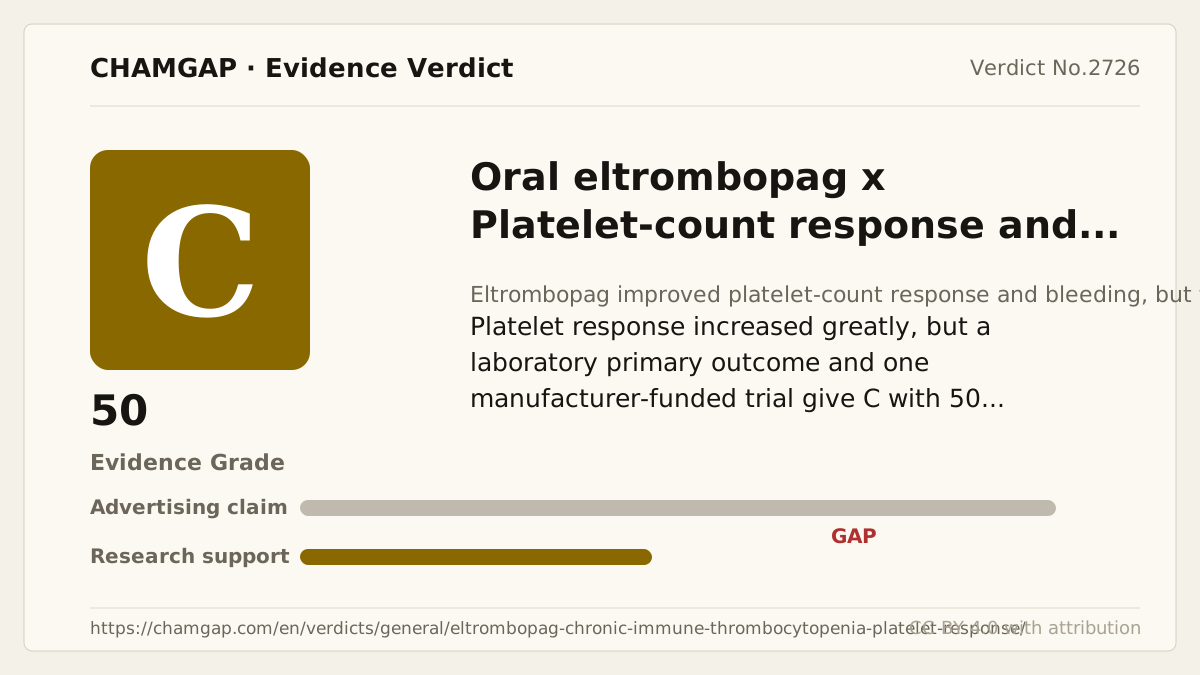
research showsThe grade is C with 50 points. RAISE randomized and analyzed 197 patients by assigned group. At least one platelet response of 50 to 400×10⁹/L occurred in 79% versus 28%, odds ratio 8.2 (99% CI 3.59 to 18.73; P<.0001). The primary outcome, however, was a laboratory count rather than bleeding or quality of life, and the confirmatory evidence is one 197-patient GlaxoSmithKline-funded trial.
ads claimReaching a target platelet-count range is not the same claim as improving the overall balance of major bleeding, thrombosis, and death. Marketing should separate the primary laboratory response from the secondary bleeding result.
Useful facts when choosing a product
- RAISE is registered as NCT00370331.
- The primary outcome was platelet response from 50 to 400×10⁹/L; WHO bleeding was secondary.
- Three thromboembolic events occurred with eltrombopag and none with placebo.
What the research actually shows
RAISE was a six-month, multicenter, double-blind phase 3 trial that randomized 197 adults with chronic immune thrombocytopenia to eltrombopag, 135, or placebo, 62. Randomization used a central computer-generated schedule, and all 197 patients were analyzed in their assigned groups. Primary platelet response occurred in 106/135 (79%) versus 17/62 (28%), an absolute difference of 51.1 percentage points, with an odds ratio of 8.2 (99% CI 3.59 to 18.73). No widely validated minimum clinical difference exists for this binary laboratory outcome, so the absolute response difference and odds ratio were retained rather than converted to a continuous effect size. An absolute difference exceeding 50 points was classified as large. Total enrollment below 200 was counted as one design limitation. The paper names GlaxoSmithKline as funder.
Why this is classified as C (50)
A large platelet-response difference was limited by a surrogate laboratory outcome, one manufacturer-funded confirmatory trial, and enrollment below 200, giving C with 50 points.
Counterpoint. This verdict is limited to the six-month RAISE setting in chronic immune thrombocytopenia. Other causes of thrombocytopenia and pre-procedure use are separate indications.
Rejudgment record. Cross-check applied — Cross-checked the Lancet RAISE report and NCT00370331 for the primary platelet response, all 197 randomized patients, secondary bleeding, GlaxoSmithKline funding, and thromboembolic events
| Endpoint | S | Surrogate marker - laboratory or imaging measures |
| Replication | R1 | Single confirmatory trial |
| Independence | I0 | Evidence comes only from manufacturer studies |
| Effect size | E+ | Meets the clinically important threshold |
The scoring table and the verdict agree (C).
Sub-claim grades by effect
This ingredient is marketed for several effects. A single overall grade blends strong and weak claims together, so each effect is graded separately here. The overall grade reflects the strongest disconfirming or core claim.
| Effect (sub-claim) | Grade | Basis |
|---|---|---|
| Increased platelet-count response | C | Response was 79% versus 28%, but the measure is a laboratory surrogate. |
| Reduced WHO grade 1 to 4 bleeding | C | The odds ratio was 0.35, but bleeding was a secondary rather than primary outcome. |
Cross-check — Codex and Claude
Evidence Table
| Study | Design | Sample | Funding | Endpoint | Result | Weight |
|---|---|---|---|---|---|---|
| Study 1 | Multicenter double-blind placebo-controlled phase 3 randomized trial | 62 | GlaxoSmithKline | Platelet response of 50 to 400×10⁹/L during six months | At least one response in 79% versus 28%, OR 8.2 (99% CI 3.59 to 18.73); WHO grade 1 to 4 bleeding OR 0.35 (95% CI 0.19 to 0.64); thromboembolism in three versus zero | Single manufacturer-funded confirmatory trial with a laboratory primary outcome |
Receipt — 1 References
All 1 cited sources were verified for existence at the original page (as of 2026-08-18).
Reviewed and approved: Chamgap Editorial Team · Approval date: 2026-08-18 · Corrections: none
Cite this verdict
[Chamgap] Eltrombopag x chronic immune thrombocytopenia — Evidence Grade C·50. 1 cited sources checked. Source: https://chamgap.com/en/verdicts/general/eltrombopag-chronic-immune-thrombocytopenia-platelet-response/ · CC BY 4.0CC BY 4.0 — free to use with attribution; do not distort grades, numbers, or verdict meaning.
What this document does and does not do
Chamgap is an information source. It reports what research has and has not confirmed; it does not tell readers what to take or buy. That decision belongs to readers and, when needed, medical or legal professionals. This verdict reflects literature available up to the search date and may change as new research appears. Nothing here is medical advice.