
Cotton-swab ear cleaning,
does it really help with Increased cerumen occlusion?
research showsThe grade is C. In a cross-sectional study of 651 pediatric patients, 401 (62%) had used swabs in the prior two months, and blinded examiners found at least 75% occlusion in 46 canals (7%) on each side. Use was associated on the left (P=.02) but not the right (P=.27). The design cannot distinguish swab-caused blockage from swab use prompted by existing wax.
ads claimCleaning the outer pinna after bathing is different from inserting a swab into the canal. Korean ENT advice generally directs symptoms or recurrent blockage to examination. Verdict 2452 is C with 50 points for cerumenolytics treating existing blockage, while verdict 2369 is D with 28 points for ear candling. This verdict asks whether a cleaning habit causes blockage.
Useful facts when choosing a product
- Exposure was self-reported use in the prior two months.
- Occlusion was confirmed by otoscopy and defined as at least 75% blockage.
- Canal trauma and eardrum perforation are separate reported harms.
What the research actually shows
Macknin 1994 enrolled 651 consecutive Cleveland Clinic pediatric patients aged two weeks to 20 years. Parents and patients reported swab use during the prior two months; detailed frequency and duration were not confirmed. Examiners unaware of questionnaire answers used otoscopy and defined the outcome as at least 75% canal occlusion. User-versus-nonuser absolute rates, ORs, 95% CIs, and adjustment variables were not confirmed. Registration and funding wording could not be confirmed. Perforation, canal trauma, and otitis externa are reported elsewhere but were not used to grade cerumen occlusion.
Why this is classified as C (46)
Phi about 0.091 is only an approximation reconstructed from a rounded P value, not a reported estimate, and is just below Cohen r=0.10. Unknown temporality, no adjustment, and significance in only one ear give C with 46 points.
Counterpoint. A plausible pushing mechanism does not by itself establish causation in this study.
Rejudgment record. Cross-check applied — Unadjusted cross-sectional evidence positive on only one side with unavailable effect estimates
| Endpoint | S | Surrogate marker - laboratory or imaging measures |
| Replication | R1 | Single confirmatory trial |
| Independence | I1 | Mixed funding sources |
| Effect size | E~ | Statistically positive but below the threshold |
The scoring table and the verdict agree (C).
Sub-claim grades by effect
This ingredient is marketed for several effects. A single overall grade blends strong and weak claims together, so each effect is graded separately here. The overall grade reflects the strongest disconfirming or core claim.
| Effect (sub-claim) | Grade | Basis |
|---|---|---|
| Association with left-ear occlusion | C | P=.02, but effect magnitude and temporality were unavailable. |
| Association with right-ear occlusion | D | The association was not significant, P=.27. |
| Cotton swabs cause cerumen impaction | C | The cross-sectional design cannot establish causal direction. |
Cross-check — Codex and Claude
Evidence Table
| Study | Design | Sample | Funding | Endpoint | Result | Weight |
|---|---|---|---|---|---|---|
| Study 1 | Cross-sectional questionnaire with blinded same-visit otoscopy | 401 | Funding and acknowledgement section not confirmed | At least 75% cerumen occlusion of the ear canal | 46 canals (7%) on each side; left P=.02 and right P=.27; group-specific rates, OR, and 95% CI not confirmed | Pivotal but limited cross-sectional evidence |
Receipt — 3 References
All 3 cited sources were verified for existence at the original page (as of 2026-08-08).
Reviewed and approved: Chamgap Editorial Team · Approval date: 2026-08-08 · Corrections: none
Cite this verdict
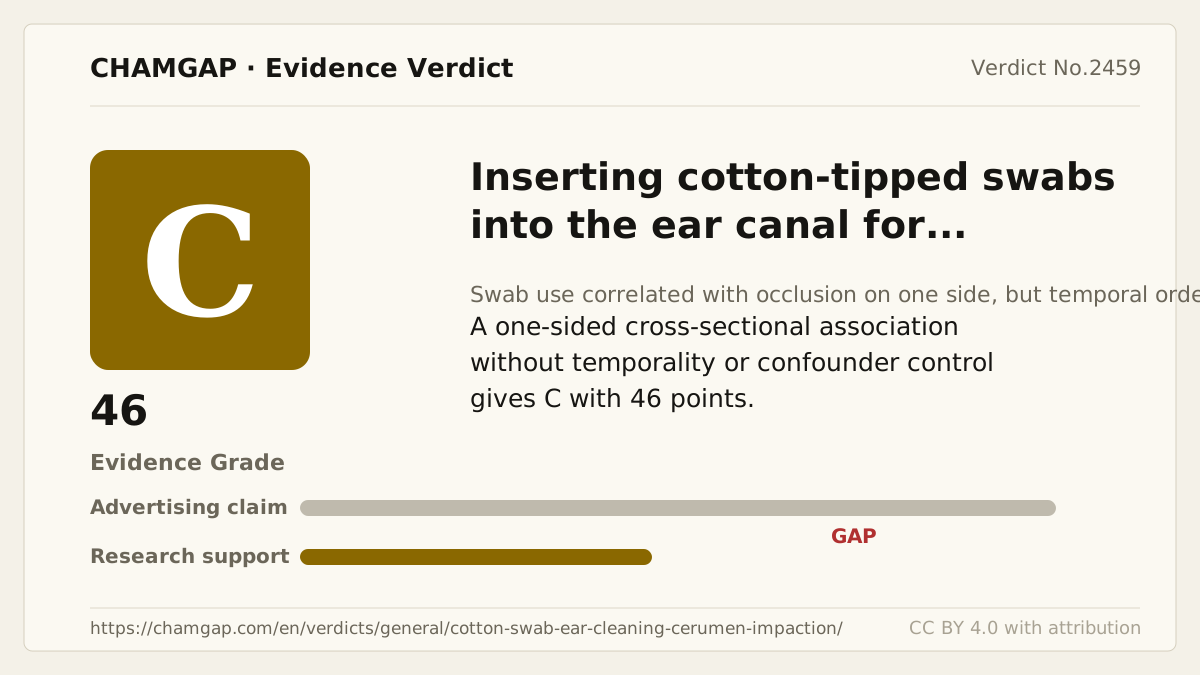
[Chamgap] Cotton-swab ear cleaning x increased cerumen occlusion — Evidence Grade C·46. 3 cited sources checked. Source: https://chamgap.com/en/verdicts/general/cotton-swab-ear-cleaning-cerumen-impaction/ · CC BY 4.0CC BY 4.0 — free to use with attribution; do not distort grades, numbers, or verdict meaning.
What this document does and does not do
Chamgap is an information source. It reports what research has and has not confirmed; it does not tell readers what to take or buy. That decision belongs to readers and, when needed, medical or legal professionals. This verdict reflects literature available up to the search date and may change as new research appears. Nothing here is medical advice.