
Caplacizumab,
does it really help with Faster platelet response and fewer clinical events in acquired thrombotic thrombocytopenic purpura?
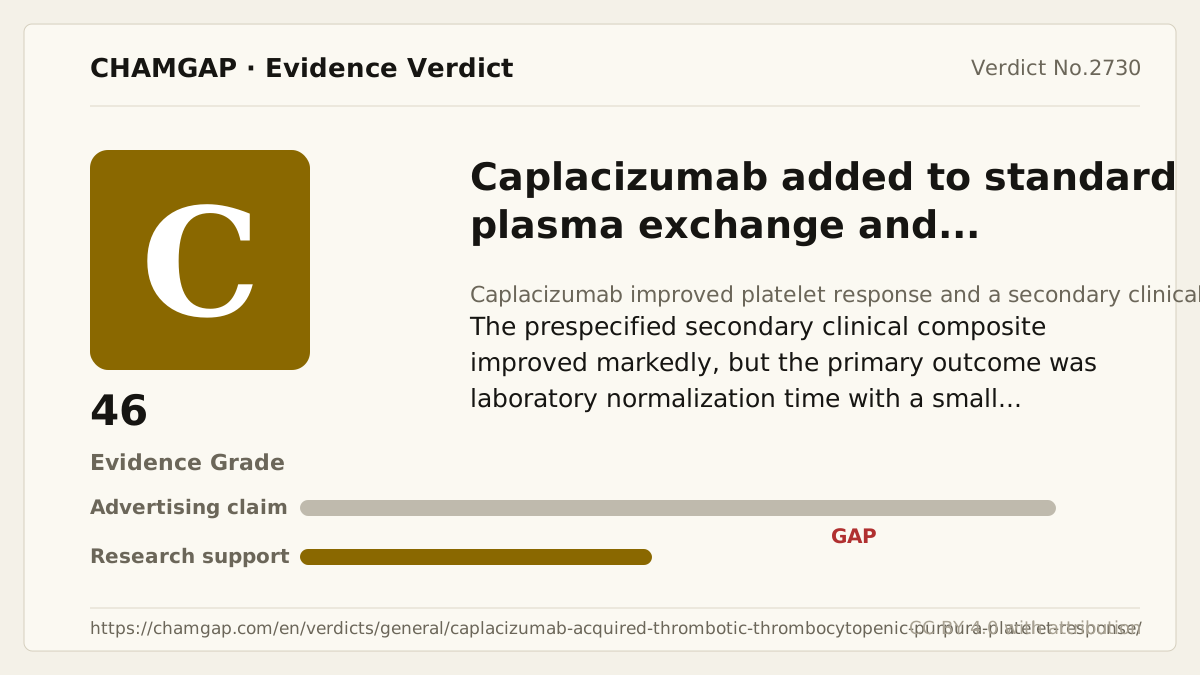
research showsThe grade is C with 46 points. HERCULES randomized 145 patients to caplacizumab, 72, or placebo, 73. Median time to platelet-count normalization was 2.69 versus 2.88 days, 0.19 day (about 4.6 hours) shorter, while the instantaneous probability of normalization was 1.55 times as high (95% CI 1.10 to 2.20; P=.01). Importantly, the prespecified secondary clinical composite of TTP-related death, recurrence, or major thromboembolism was markedly lower, 12% versus 49%. The primary outcome, however, was time to laboratory platelet normalization, with no validated minimum important time threshold and a small absolute difference.
ads claimFaster platelet normalization and a reduced secondary composite are real findings, but they cannot be restated as proven mortality reduction. The trial was not designed to assess survival benefit, and bleeding harm must be considered.
Useful facts when choosing a product
- The registration is NCT02553317.
- Efficacy used all 145 randomized patients; safety used 144 treated patients.
- Serious bleeding occurred in eight caplacizumab patients (11%) versus one placebo patient (1%).
What the research actually shows
This double-blind placebo-controlled trial at 92 sites randomized 145 patients and analyzed efficacy in all randomized patients. The primary endpoint was time to platelet-count normalization. Median time was 2.69 versus 2.88 days, 0.19 day (about 4.6 hours) shorter, while the instantaneous probability of normalization was 1.55 times as high (95% CI 1.10 to 2.20). With no validated minimum important time threshold and a small absolute difference, the effect axis is E~. The prespecified secondary clinical composite of TTP-related death, recurrence, or major thromboembolism fell markedly to 12% versus 49% (P<.001). This clinical benefit is important, but it does not raise the grade because the primary endpoint was laboratory based and the clinical composite was prespecified secondary. Enrollment below 200 was counted as one limitation. The paper states support from Ablynx, and four company employees were coauthors.
Why this is classified as C (46)
The laboratory normalization-time primary endpoint had no validated minimum important threshold and only a 0.19-day absolute difference, qualifying as E~; the clinical composite was prespecified secondary, and evidence came from one small manufacturer trial, giving C with 46 points.
Counterpoint. The marked 12% versus 49% reduction in the prespecified secondary clinical composite is important clinical benefit. C describes the primary-versus-secondary evidence structure, not lack of drug activity. This is add-on evidence with plasma exchange and immunosuppression, not replacement-monotherapy evidence.
Rejudgment record. One small manufacturer-funded trial — The laboratory normalization-time primary endpoint had no validated minimum important time threshold and a 0.19-day absolute difference, qualifying as E~, while the marked prespecified secondary clinical-composite reduction, single small manufacturer trial, and serious bleeding were also considered
| Endpoint | S | Surrogate marker - laboratory or imaging measures |
| Replication | R1 | Single confirmatory trial |
| Independence | I0 | Evidence comes only from manufacturer studies |
| Effect size | E~ | Statistically positive but below the threshold |
The scoring table and the verdict agree (C).
Sub-claim grades by effect
This ingredient is marketed for several effects. A single overall grade blends strong and weak claims together, so each effect is graded separately here. The overall grade reflects the strongest disconfirming or core claim.
| Effect (sub-claim) | Grade | Basis |
|---|---|---|
| Faster platelet-count response | C | The rate ratio was 1.55, but the primary outcome was laboratory based. |
| Reduced composite of TTP-related death, recurrence, or major thromboembolism | C | Rates fell markedly to 12% versus 49%, but this was a prespecified secondary outcome. |
Cross-check — Codex and Claude
Evidence Table
| Study | Design | Sample | Funding | Endpoint | Result | Weight |
|---|---|---|---|---|---|---|
| Study 1 | Double-blind placebo-controlled phase 3 randomized trial at 92 sites | 144 | Ablynx | Time to platelet-count normalization | Median 2.69 versus 2.88 days, a 0.19-day (about 4.6-hour) difference; instantaneous normalization probability 1.55 times as high (95% CI 1.10 to 2.20); prespecified secondary clinical composite 12% versus 49%; serious bleeding 11% versus 1% | Single manufacturer-funded trial with a laboratory primary outcome; the prespecified secondary clinical composite supports substantial clinical benefit |
Receipt — 1 References
All 1 cited sources were verified for existence at the original page (as of 2026-08-18).
Reviewed and approved: Chamgap Editorial Team · Approval date: 2026-08-18 · Corrections: none
Cite this verdict
[Chamgap] Caplacizumab x acquired thrombotic thrombocytopenic purpura — Evidence Grade C·46. 1 cited sources checked. Source: https://chamgap.com/en/verdicts/general/caplacizumab-acquired-thrombotic-thrombocytopenic-purpura-platelet-response/ · CC BY 4.0CC BY 4.0 — free to use with attribution; do not distort grades, numbers, or verdict meaning.
What this document does and does not do
Chamgap is an information source. It reports what research has and has not confirmed; it does not tell readers what to take or buy. That decision belongs to readers and, when needed, medical or legal professionals. This verdict reflects literature available up to the search date and may change as new research appears. Nothing here is medical advice.