
Pinhole glasses,
does it really help with Permanent reduction of myopic refractive error and restoration of unaided vision through continued wear?
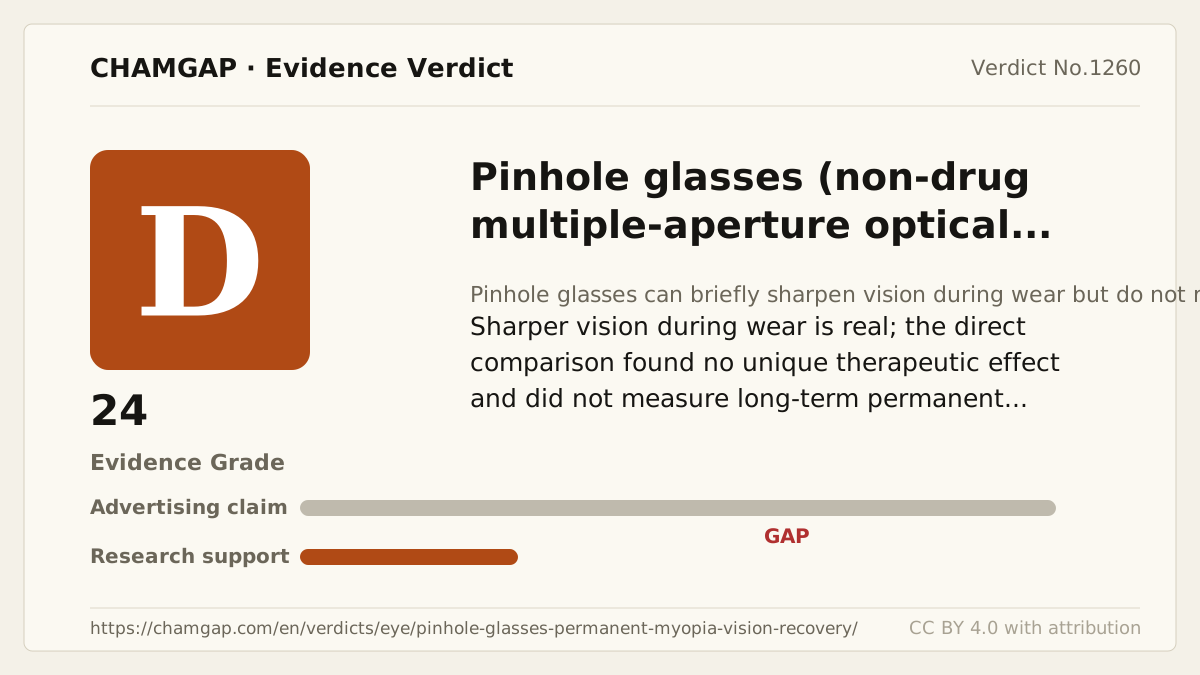
research showsSharper vision during wear is real, but Kim et al. 2017 measured therapeutic effects and found no effect unique to multiple pinholes, giving D with 24 points. Long-term permanent refractive change was not measured.
ads claimMarketing converts the immediate optical fact that vision looks sharper through a small hole into stronger eye muscles, lower myopic prescription, freedom from glasses, and permanent unaided-vision recovery. Acuity during wear is not a post-treatment refractive change, and delaying professional examination can postpone diagnosis of uncorrected myopia or eye disease.
Useful facts when choosing a product
- Small apertures block peripheral rays, reduce the retinal blur circle, and increase depth of focus. In 48 adults with mean spherical equivalent -2.4 D, unaided distance acuity genuinely improved during wear from 0.44 to 0.19 logMAR (Kim et al. 2014, PMID 25118263).
- A 36-person comparison found improved acuity and depth of focus during both single- and multiple-pinhole wear, but no therapeutic effect unique to multiple pinholes (Kim et al. 2017, PMID 28378561).
- In the same 48-person study, visual-field mean deviation worsened during wear from -0.48 to -4.22 dB, and contrast sensitivity and stereopsis also declined (Kim et al. 2014, PMID 25118263).
What the research actually shows
Kim and colleagues in 2014 tested 48 adults with a mean spherical equivalent of -2.4 diopters and found better distance and near acuity and depth of focus during pinhole-glasses wear but worse visual-field sensitivity, contrast sensitivity, and stereopsis. Kim and colleagues in 2017 compared single- and multiple-pinhole glasses in 36 participants. Both sharpened acuity and increased depth of focus during wear while worsening visual fields, contrast, stereopsis, reading speed, and ocular discomfort; there was no special therapeutic effect of the multiple apertures. These were immediate or short-term functional studies, not permanent refractive-correction trials. The FTC's 1994 enforcement record restricted claims after determining that pinhole glasses did not produce long-term improvement, correct or cure refractive problems, replace prescription lenses, or have scientifically proven efficacy; the agency described it as its fifth pinhole-eyeglass case.
Why this is classified as D (24)
Kim et al. 2017 directly measured therapeutic effects and found no effect unique to multiple pinholes. This was measured and null rather than never studied, giving D with 24 points. Long-term permanent refractive change itself was not measured.
Counterpoint. The FTC repeatedly acted against permanent vision-improvement and refractive-correction advertising, and reduced fields, contrast, and stereopsis can make driving or walking hazardous. These are regulatory and safety notes, not grounds for the D grade.
Rejudgment record. Cross-check applied — Applied D because Kim et al. 2017 directly measured therapeutic effects and found no effect unique to multiple pinholes; long-term permanent refractive change was not measured, and FTC enforcement and safety were excluded from the grade basis
Sub-claim grades by effect
This ingredient is marketed for several effects. A single overall grade blends strong and weak claims together, so each effect is graded separately here. The overall grade reflects the strongest disconfirming or core claim.
| Effect (sub-claim) | Grade | Basis |
|---|---|---|
| Permanent reduction of myopic refractive error through continued wear | D | Kim et al. 2017 directly compared therapeutic effects and found none unique to multiple pinholes; long-term permanent refractive change was not measured. |
| Permanent restoration of unaided vision after removing the glasses | D | The optical effect during wear is real, but the direct comparison found no unique therapeutic effect and did not measure permanent recovery after removal. |
Cross-check — Codex and Claude
Evidence Table
| Study | Design | Sample | Funding | Endpoint | Result | Weight |
|---|---|---|---|---|---|---|
| Kim WS et al. 2014 | Within-person comparison of visual function before and during pinhole-glasses wear in healthy adults | 48 | Funding source not stated in the PubMed abstract | Acuity, depth of focus, accommodation, visual fields, contrast sensitivity, and stereopsis during wear | Acuity improved during wear, but visual-field sensitivity, contrast sensitivity, and stereopsis significantly worsened; no permanent change was assessed. | Direct evidence of temporary optical benefit and functional impairment |
| Kim WS et al. 2017 | Comparative study of single-pinhole and multiple-pinhole glasses | 36 | Korean Optometry Society Research Fund; no conflicts reported | Acuity, depth of focus, visual fields, contrast, stereopsis, reading speed, and discomfort | Both glasses improved acuity during wear but worsened visual fields, contrast, stereopsis, reading speed, and discomfort, with no unique therapeutic effect from multiple apertures. | Replication of temporary benefit and functional loss |
| U.S. Federal Trade Commission pinhole-eyeglass enforcement, 1994 | Fifth regulatory enforcement action addressing false and unsubstantiated vision-improvement advertising | 4 | United States Federal Trade Commission | Claims of long-term improvement, correction, or cure of refractive errors and replacement of prescription lenses | The FTC directly stated that long-term improvement did not result, refractive problems were not corrected or cured, and efficacy had not been scientifically proven. | Regulatory note excluded from grading |
Receipt — 3 References
All 3 cited sources were verified for existence at the original page (as of 2026-07-24).
Reviewed and approved: Chamgap Editorial Team · Approval date: 2026-07-24 · Corrections: none
Cite this verdict
[Chamgap] Pinhole glasses x permanent reduction of myopia and restoration of unaided vision — Evidence Grade D·24. 3 cited sources checked. Source: https://chamgap.com/en/verdicts/eye/pinhole-glasses-permanent-myopia-vision-recovery/ · CC BY 4.0CC BY 4.0 — free to use with attribution; do not distort grades, numbers, or verdict meaning.
What this document does and does not do
Chamgap is an information source. It reports what research has and has not confirmed; it does not tell readers what to take or buy. That decision belongs to readers and, when needed, medical or legal professionals. This verdict reflects literature available up to the search date and may change as new research appears. Nothing here is medical advice.