
A 36 mg/dL treatment-threshold strategy for neonatal hypoglycemia,
does it really help with Noninferior Bayley neurodevelopment at 18 months versus a 47 mg/dL threshold?
research showsThe grade is C. HypoEXIT found that the 36 mg/dL threshold was not more than 7.5 Bayley-III-NL points worse than the 47 mg/dL threshold at 18 months. Developmental data were available for only 582 of 689 randomized infants, so the noninferiority design and more than 15% missing follow-up limit certainty.
ads claimThe result does not show that 36 mg/dL is superior or universally safe. It directly informs clinical threshold protocols for a narrow group with asymptomatic moderate neonatal hypoglycemia.
Useful facts when choosing a product
- The lower threshold reduced glucose measurements and treatment interventions.
- The traditional threshold reduced the frequency and severity of hypoglycemic episodes.
- The result cannot be extrapolated to symptomatic, severe, or persistent hypoglycemia.
What the research actually shows
The trial used web-based block randomization across 17 Dutch hospitals, and Bayley examiners were unaware of treatment assignment. Outcomes were available for 287/348 infants in the lower-threshold group and 295/341 in the traditional-threshold group. The two named avoidable limitations are the noninferiority design and more than 15% missing 18-month developmental data. An untreated arm was not counted as a defect because withholding management from hypoglycemic newborns would be inappropriate. The Netherlands Organization for Health Research and Development funded the trial, and the paper states that no sponsor-author confidentiality agreements existed because it was publicly funded.
Why this is classified as C (54)
A publicly funded single randomized trial met a prespecified 7.5-point noninferiority margin on a patient-centered developmental outcome, but noninferiority design and substantial missing follow-up cap the grade at C with 54 points.
Counterpoint. Noninferiority means not worse beyond the margin, not superiority of the lower threshold.
Rejudgment record. Source and registry cross-check — Patient-centered Bayley development met a 7.5-point margin, with noninferiority design and substantial missing outcome data
| Endpoint | P | Patient-reported treatment goal - the symptom is the goal |
| Replication | R1 | Single confirmatory trial |
| Independence | I2 | Decisive evidence is publicly or non-profit funded |
| Effect size | E+ | Meets the clinically important threshold |
The scoring table and the verdict agree (C).
Sub-claim grades by effect
This ingredient is marketed for several effects. A single overall grade blends strong and weak claims together, so each effect is graded separately here. The overall grade reflects the strongest disconfirming or core claim.
| Effect (sub-claim) | Grade | Basis |
|---|---|---|
| Noninferior Bayley development at 18 months | C | The prespecified 7.5-point inferiority limit was not crossed. |
Cross-check — Codex and Claude
Evidence Table
| Study | Design | Sample | Funding | Endpoint | Result | Weight |
|---|---|---|---|---|---|---|
| Study 1 | Multicenter randomized noninferiority trial | 582 | Public funding from the Netherlands Organization for Health Research and Development; no confidentiality agreements | Bayley-III-NL cognitive and motor development scores at 18 months | Cognitive 102.9 versus 102.2 and motor 104.6 versus 104.9; the prespecified 7.5-point inferiority limit was not crossed | Single publicly funded noninferiority trial with a patient-centered outcome |
Receipt — 1 References
All 1 cited sources were verified for existence at the original page (as of 2026-08-18).
Reviewed and approved: Chamgap Editorial Team · Approval date: 2026-08-18 · Corrections: none
Cite this verdict
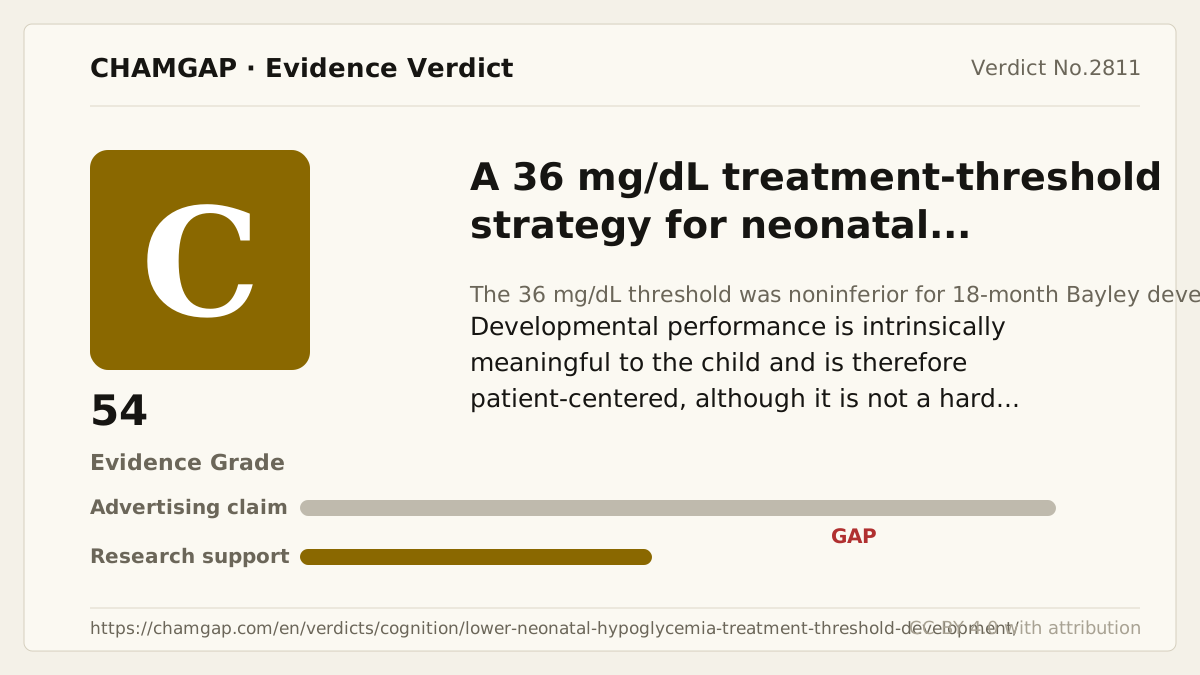
[Chamgap] Lower Treatment Threshold for Neonatal Hypoglycemia Was Noninferior for Development — Evidence Grade C·54. 1 cited sources checked. Source: https://chamgap.com/en/verdicts/cognition/lower-neonatal-hypoglycemia-treatment-threshold-development/ · CC BY 4.0CC BY 4.0 — free to use with attribution; do not distort grades, numbers, or verdict meaning.
What this document does and does not do
Chamgap is an information source. It reports what research has and has not confirmed; it does not tell readers what to take or buy. That decision belongs to readers and, when needed, medical or legal professionals. This verdict reflects literature available up to the search date and may change as new research appears. Nothing here is medical advice.